


De Medaka, ook wel Japanse ricefish known as ricefish, has taken a fascinating journey from a modest inhabitant of Asian rice fields to a beloved aquarium fish worldwide. These small, colourful fish, only 3 to 4 centimetres long, have won the hearts of aquarium enthusiasts all over the world. But how did this remarkable transformation come about? In this article we dive into the rich history of the Medaka, from its origins in the wild to its current status as a popular pet. We discover how centuries of domestication shaped this resilient fish and what the future holds for this special species.
From Japanese rice fields to aquariums worldwide
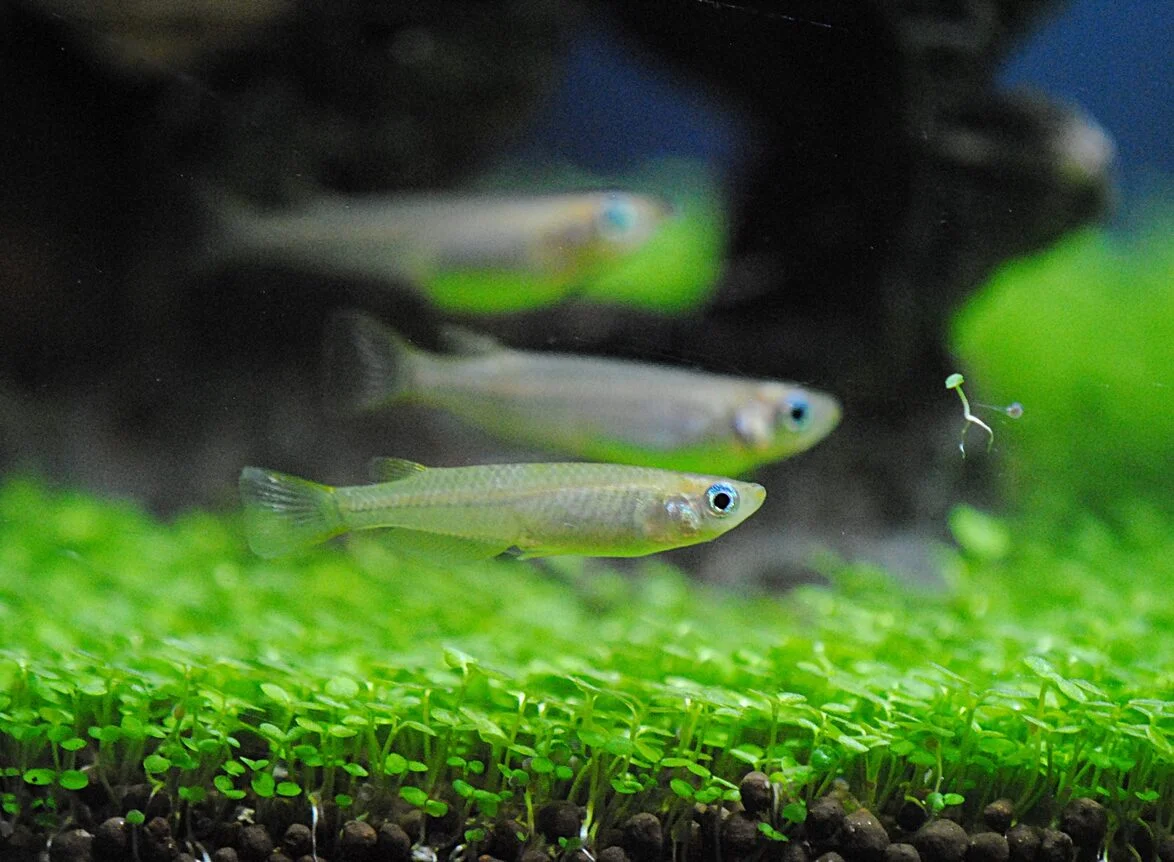
The Medaka (Oryzias latipes) originally comes from East Asia, mainly from Japan, Korea and parts of China. These small fish lived for millions of years in shallow waters, rice fields, ditches and slowly flowing streams. In Japan, farmers already noticed them in the 17th century, when they found them in large numbers in their rice fields. The name "Medaka" comes from a Japanese word that literally means "high eye", referring to their striking eyes, which sit high on their head. This anatomical feature helps them spot food at the water surface and detect predators from above. In their natural habitat, Medaka played an important role in the rice field ecosystem. They fed on mosquito larvae and other small insects, which made them natural pest controllers for rice farmers. Scientific research has shown that a single Medaka can eat up to 100 mosquito larvae a day. Thanks to their adaptability they could survive in water temperatures between 4 and 40 degrees Celsius, although they thrive best between 18 and 25 degrees. This resilience would later become one of the reasons they became so successful as an aquarium fish.Further reading
- How Medaka ricefish conquered Europe
- Medaka in Japan: tradition and culture
- Medaka, the perfect pond fish for the Netherlands
- Medaka history: from old Japan to your aquarium or pond
Spread to the West
The introduction of Medaka into Western countries began in the early 20th century, mainly for scientific purposes. Japanese researchers found that these fish were ideal test subjects for biological research because of their transparent embryos and short generation time of about two months. In 1921 the first Medaka were brought to Europe for laboratory studies. Only in the 1980s and 1990s did aquarium enthusiasts in Europe and North America start to discover the Medaka as a pet. Their small size, peaceful nature and beautiful colours made them perfect for both indoor and outdoor aquariums.Domestication: how Medaka won our hearts
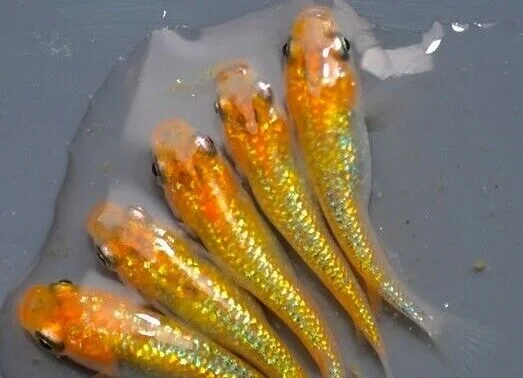
The domestication of the Medaka actually began as early as the Edo period in Japan (1603-1868), when people started keeping these fish in pots and small ponds for their amusement. Unlike many other aquarium fish, the domestication of Medaka happened relatively gradually and organically. Japanese enthusiasts began breeding selectively for traits such as colour, fin shape and body build. These early breeding programmes laid the foundation for the hundreds of varieties we know today. Scientists estimate that more than 500 cultivated varieties of Medaka now exist, ranging from metallic gold and deep orange to transparent and even blue. Breeding Medaka became a serious hobby in Japan and even an art form, comparable to breeding Koi carp. Breeders developed specific techniques to strengthen desired traits and create new colour variants. An important breakthrough came in the 1990s, when breeders discovered how to intensify the metallic sheen through selective pairing. These "Hikari" varieties, with their dazzling, reflective scales, became enormously popular. Today there are specialist breeders who devote themselves entirely to creating new Medaka varieties, and some rare specimens sell for hundreds of euros.Why Medaka make perfect pets
Medaka have several traits that make them ideal pets for beginners as well as experienced aquarium keepers. First, they are extremely adaptable and can be kept in fairly small aquariums, from 30 litres for a group of 6 to 8 fish. They are social animals that thrive in groups and have a peaceful temperament, so they get along well with other small, non-aggressive species. Their care is relatively simple because they are not fussy about food and can survive in a wide range of water conditions.Practical advantages of Medaka:- Little space needed (suitable for small aquariums)
- Peaceful temperament
- Easy to breed for beginners
- Tolerant of temperature fluctuations
- Eats virtually all types of fish food
- Suitable for outdoor ponds in temperate climates
- Long lifespan (3-5 years with good care)
- Active and lively behaviour
Receive a 10% discount on your first order when you sign up for our newsletter.


Write a comment
Je e-mailadres wordt niet gepubliceerd. Verplichte velden zijn gemarkeerd met *