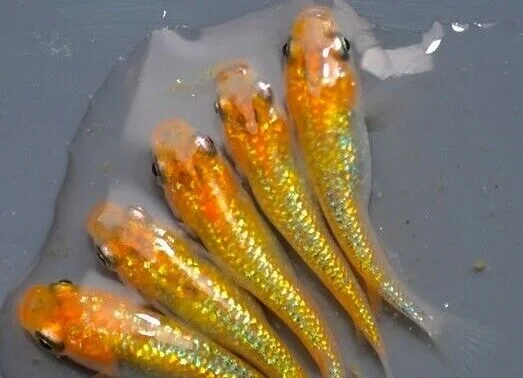
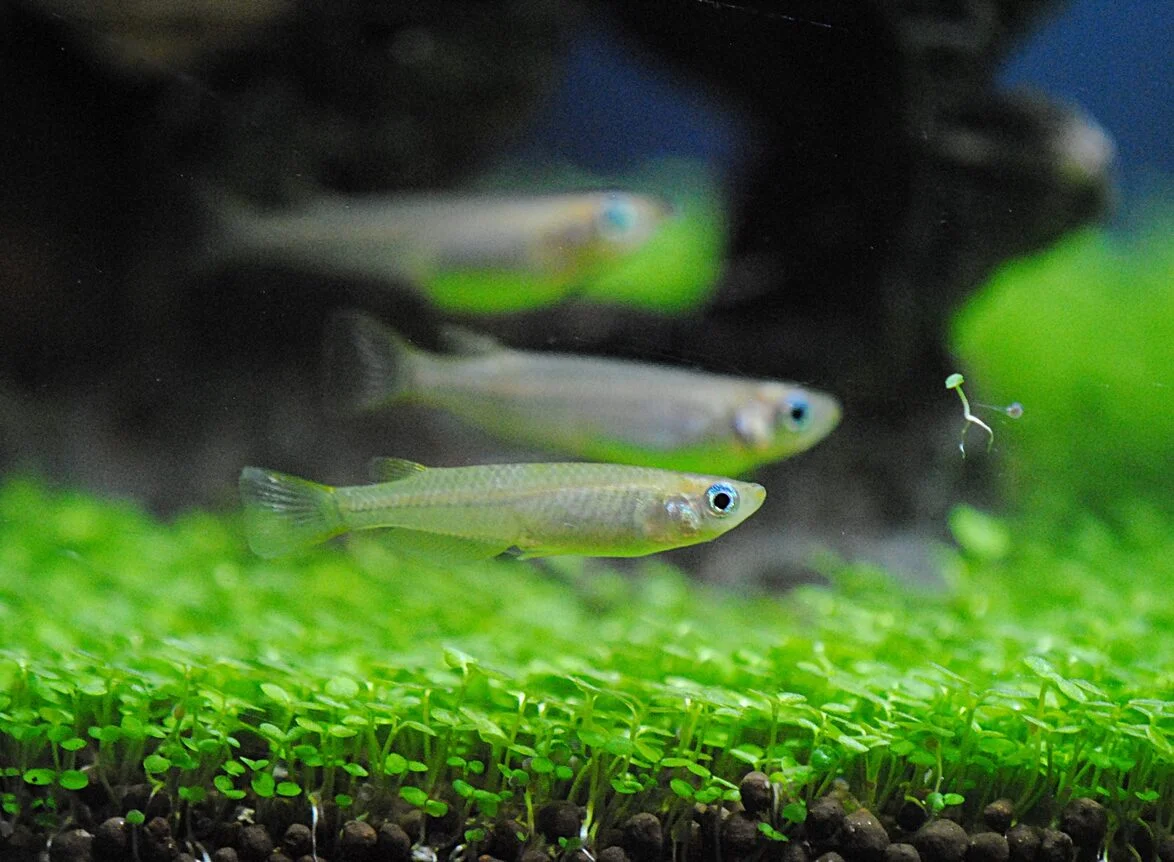
Our first medaka book has been published: Medaka, The Handbook for Keeping and Breeding, written by Matthijs van der Velden, the breeder behind Medaka.nl. From November 2026 the first print run is available in the webshop.
Dutch-language and fully in color: the book has 157 pages and measures 15.2 × 22.9 cm. It is meant for people who keep medaka in a tub, an aquarium or a garden pond, from beginner to advanced breeder.
Why a Dutch handbook for medaka came about
Anyone who wants to keep medaka now gathers their information from forums, foreign sources and advice that contradicts itself. Some of it is meant for a different climate, some for a different fish. That is tricky when you simply want to know what to do with your own tank, tub or pond.
Behind the book stands thirty years of keeping aquarium fish; today the author keeps only ricefish: medaka. What is in the book comes from those years by the water. That is where the answers come from to the questions a keeper really runs into: what do I buy, what do I set up, what do I feed, when do I step in and when do I leave the fish alone.
There is also a bit of background. Temminck and Schlegel described the fish in 1846 in the Fauna Japonica, and in Japan it has been kept for centuries. What swims in the shop is a breeding form that does not belong in nature. Since 2012 researchers even recognize two species, a southern and a northern one. That explains a lot about how the fish behaves in your water, and the book explains it without turning it into a history lesson.
What is in the medaka book, part by part
Nine chapters in four parts, a glossary and a closing section: the structure follows a keeper's path, from the basics through feeding and breeding to names and finally the year round.
| Part | Chapters | What it is about |
|---|---|---|
| I, The basics | 1. Understanding medaka, 2. History: from rice paddy to pure breed, 3. Purchase and the first month, 4. Housing, water, substrate and plants | The fish, its origin, the start and the setup of your water |
| II, Feeding and breeding | 5. Feeding and growth, 6. Breeding | What you feed and how you raise eggs and fry |
| III, Names and quality | 7. Varieties and names | The atlas and reading a name |
| IV, The year round | 8. Diseases, signs and prevention, 9. Winter months and season management | Health and overwintering |
The feeding chapter covers the three feeds from the breeder: Baby Meal, Grow Up Meal and Adult Meal. The book explains why floating food is the rule. An extruded pellet holds air and keeps floating, and a pellet that still sinks after a few minutes is a signal. Green water returns in that chapter as the first food for fry.
For the substrate, the housing chapter sets a fixed structure: one third soil underneath and two thirds play sand plants on top, in depths of 9, 12 and 15 cm.
The atlas of thirty varieties and how to read a name
Medaka have names that look unreadable at first glance. The medaka book contains an atlas of thirty varieties. Each portrait gives the Japanese name, the reading and one line about what characterizes the variety. So you quickly see what you have, and you know how to pronounce the name.
The structure of such a name is also covered: first color or pattern, then scale type, then gloss, then fin or body. With that order you can parse a name the book itself does not mention. If you see a new name on a sales site or in a Japanese catalogue, you can cut it into pieces and know roughly what is meant.
That helps when buying and when judging what you buy. A name that does not fit the order, or a description that does not match the fish, is a reason to ask questions. The history, from rice paddy to pure breed, provides the background: why quality in medaka is about pure breeding and not just color.
What the book gives you for your own water and season
What you take from it are things you can apply yourself. A few examples that come back in the book:
- A rule of thumb for incubation time, so you know when to expect eggs.
- A quick-search table in the disease chapter, from sign to likely cause to first action.
- The signal of a pellet that sinks, as a sign that the food does not suit your fish.
- Which fish go into winter, you choose with the winter selection in autumn, not by good luck.
The rule of thumb for incubation time is that the temperature in degrees Celsius times the incubation time in days comes to roughly 250. At 25 °C eggs hatch after about ten days, at 20 °C after about twelve and a half. Anyone who breeds medaka wants to, also finds in the same chapter how many males and females to put together and how to keep eggs and parents apart.

Every disease in the disease chapter gets the same three questions:
- What is it?
- What do you see it by?
- How do you prevent and resolve it?
Medications and dosages are deliberately not included. You read what you do yourself with water, warmth, oxygen and insulation. Then the winter chapter runs through the season: autumn, the net, silt, frost and ice, what to do when a fish has to come indoors, and spring.
The first print run is out, and what comes next
With this first print run, the breeder has something that goes beyond a webshop with fish and food. This medaka book is not a reference for the shelf; it is a book to take along to the water. You open it at the tub, at the pond or beside the aquarium, read a chapter, and then get back to your fish.
An edition in other languages is on the agenda. An e-book and an Amazon edition are also in preparation. That is an outlook, not a promise with a date. As soon as there is news, it will appear on this site.
The paperback costs 27.95 euro and can be ordered via the webshop. Prefer a bookstore of the printer? Then you will also find the book in the Lulu bookstore. Every copy is printed after ordering, so expect a delivery time of a few weeks.
Further reading
- What are Medaka ricefish?
- Breeding medaka: from egg to adult ricefish
- Winter selection in medaka: who stays, who goes
- 5 reasons why green water is good for your fry
Frequently asked questions about the medaka book (FAQ)
Where can I buy the medaka book?
In our own webshop at medaka.nl. Whoever prefers a bookstore of the printer will also find the book in the Lulu bookstore.
How long does delivery take?
After you order, the book is printed (print-on-demand) and shipped as a separate package. In the Netherlands the expected time is 15 to 18 working days, so roughly two to three weeks. If you order the book together with other items from the webshop, the book therefore arrives separately.
Is there also an e-book?
Not yet. An e-book and an Amazon edition are in preparation, but no date is known. For now the book exists as a 157-page paperback in color.
Who is the book intended for?
For anyone who keeps or wants to start keeping medaka, in a tub, an aquarium or a garden pond. From the basics the book goes on to breeding, names and overwintering, so beginners and advanced keepers will find something in it. Short sentences and explained jargon keep it readable from about age twelve.
Is there also a treatment or medication against diseases?
No. The disease chapter deliberately contains no medications and no dosages. For each disease you read what it is, how you recognize it, and how to prevent and resolve it, using water, warmth, oxygen and insulation as tools. A quick-search table helps you go from what you see to the likely cause and the first action.
Get 10% off your first order when you sign up for our newsletter.