

Indoor or outdoor: Where is best To keep medaka?
Have you fallen in love with the colorful Medaka rice fish and are you wondering where these beautiful fish thrive best? You are not alone! More and more aquarium enthusiasts are discovering the charm of these small Japanese rice fish, but the question remains: inside an aquarium or outside in a pond? The answer is not as simple as it seems, as both options have their own unique benefits and challenges.
In this article we take you into the world of Medaka housing. We look at their natural habitat, discuss the pros and cons of indoor housing, and investigate how to successfully keep these resilient fish outdoors. Whether you are an experienced Medaka keeper or just starting out in this fascinating hobby, this guide will help you make the best decision for your situation and your fish.
The natural habitat of Medaka rice fish
Medaka rice fish (Oryzias latipes) are native to East Asia, mainly from Japan, Korea and parts of China. In the wild, these little survivors live in shallow rice fields, small streams, ditches and even temporary waterholes. They are true adaptors who are used to changing circumstances. The water temperature in their natural habitat varies greatly with the seasons, of about 5°C in the winter up to 30°C in the summer. These temperature fluctuations have made Medakas particularly resilient.
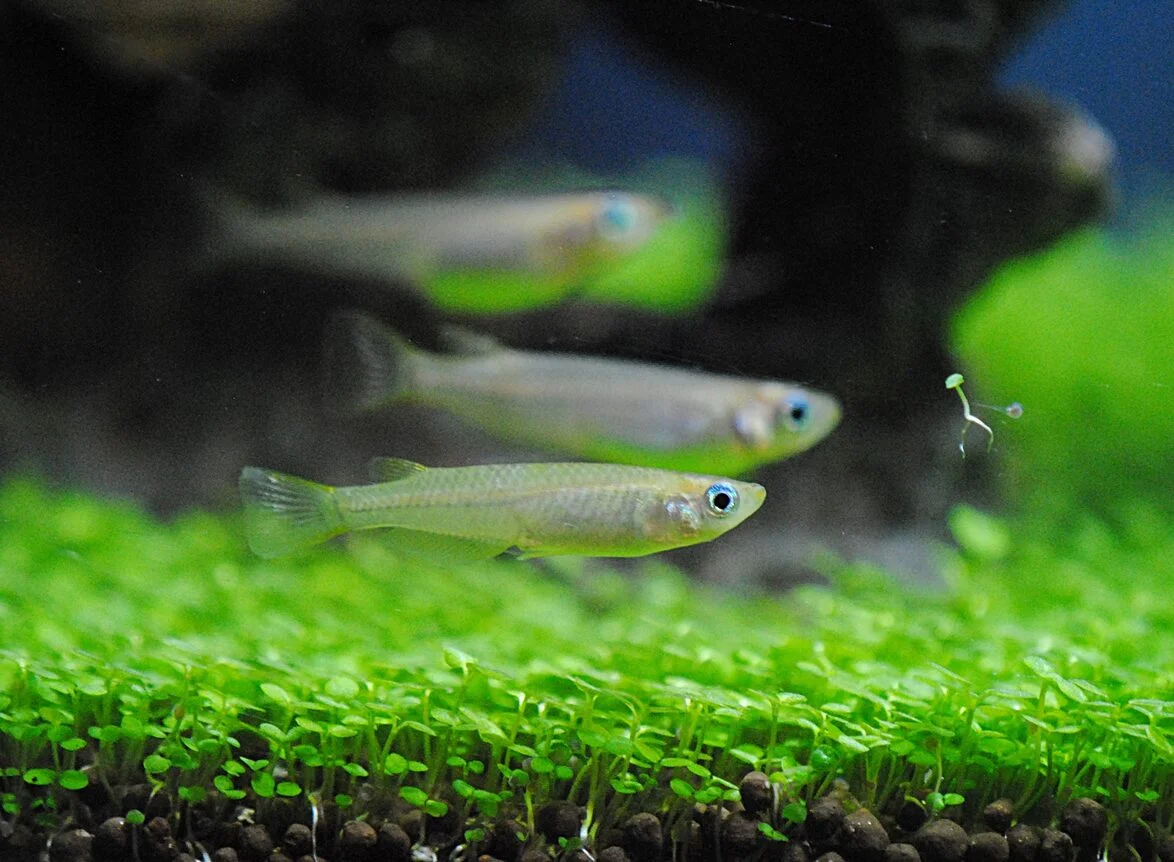
The natural habitat of Medakas is characterized by shallow, often stagnant or slowly flowing water with many aquatic plants and Sunlight. they usually swim just below the surface of the water, where they hunt for small Insects, larvae and plankton. this surface-oriented lifestyle is important to remember when furnishing their Enclosure. in their natural habitat they also experience the full cycle of seasons, which affects their reproduction and Behavior. you can imitate this natural rhythm both indoors and outdoors, albeit in different ways.
Keeping medaka indoors: benefits and considerations
Keeping Medakas indoors in an aquarium offers numerous benefits, especially for beginners. The most important asset is the control you have over all environmental factors. You can keep the water temperature stable between 18-24°C, which is ideal for these fish. You can also accurately monitor the water quality and adjust it when necessary. Indoor housing also protects your Medakas from natural enemies such as herons, cats and dragonfly nymphs. Another big advantage is that you can enjoy your fish all year round, even during cold winter months when outdoor ponds are less active.
However, there are also points of attention when it comes to indoor housing. Medakas need plenty of swimming space, so choose at least a 40 liter aquarium for a small group of 6-8 fish. Lighting is crucial: ensure a day-night rhythm of approximately 12-14 hours of light per day, preferably with natural daylight or a good aquarium lamp. Pay attention to the water depth: Medakas feel most comfortable in shallower water (15-30 cm), which differs from standard aquariums. Also ensure there are sufficient aquatic plants, both floating and planted in the ground, because this gives them hiding places and stimulates natural behavior. Don't forget to change small amounts of water regularly (10-20% per week) to keep the water quality optimal.
Practical tips for indoors:
- Use a sponge or internal filter with gentle flow
- Do not place the aquarium in direct sunlight (algae growth)
- Keep the temperature stable between 18-24°C
- Add live plants such as waterweed and floating duckweed
- Avoid overfeeding: small portions 1-2 times a day
- Check the water values weekly (pH, nitrite, nitrate)
Outdoor pond for Medaka: seasons and temperature
Keeping Medakas outside in a pond comes closest to their natural habitat. This option is becoming increasingly popular among experienced hobbyists, especially because Medakas are surprisingly hardy. In a well-designed outdoor pond they can survive temperatures just above freezing, provided the pond does not freeze over completely. The seasonal cycle has a positive effect on their health and natural behavior. In the spring in summer they are active and spawn regularly, while in the autumn become calmer in winter and eat less. This natural rhythm ensures vital, healthy fish with beautiful colors.
Temperature is the most important factor in outdoor housing. Medakas are active at temperatures between 15-28°C, with an optimum around 20-24°C. At temperatures below 10°C they become inactive and stop eating, which is normal. They can survive down to about 2-4°C, but prolonged exposure to extreme cold can be dangerous. The depth of your pond is crucial for wintering: ensure a minimum depth of 60-80 cm, so that there is a frost-free zone at the bottom. In shallow ponds (less than 40 cm) it is wise to bring the fish indoors in winter. Also pay attention to ice formation: always ensure there is an opening in the ice for gas exchange, for example with a pond heater or floating ice eater.
Outdoor seasonal calendar:
Spring (March-May)
- Temperature rises to 12-18°C
- Medakas become more active
- Start feeding carefully
- Check water quality after winter
Summer (June-August)
- Optimal temperature 20-28°C
- Peak spawning season
- Feed daily
- Pay attention to oxygen levels in warm weather
Autumn (September-November)
- Temperature drops to 10-15°C
- Reduce food gradually
- Remove dead plant remains
- Prepare pond for winter
Winter (December-February)
- Temperature 2-8°C
- Medakas are inactive at the bottom
- Do not feed below 10°C
- Ensure there is an ice-free area
Comparison table: Indoor vs Outdoor
| Aspect | Indoor (Aquarium) | Outside (Pond) |
|---|---|---|
| Temperature control | Fully adjustable | Depending season |
| Water quality | Easy to monitor | Natural balance |
| Protection enemies | Optimal | Additional measures needed |
| Visibility | All year round | Especially spring/summer |
| Natural behavior | Limited | Optimal |
| Maintenance | Regular, predictable | Seasonal |
| Startup costs | €100-300 | €200-600+ |
| Suitable for beginners | Yes | Moderate to experienced |
| Spawning behavior | Very possible | More natural and more frequent |
| Minimal space | 40 litres | 200 liters+ |
Combination of inside and outside: The best of both worlds
Many experienced Medaka holders opt for a combination strategy. They keep their fish outside in a pond in the warmer months (April-October) and move them indoors in the winter. This approach offers the best of both worlds: natural behavior and optimal growth in the summer, combined with safety and control in the winter. Moving Medakas is relatively easy, but requires some caution.
When moving, it is important to avoid temperature shocks. Allow the fish to acclimatize to the new temperature in a bucket of their old water by gradually adding water from the new environment over a period of 30-60 minutes. Choose a quiet day for the trip, preferably not in extreme weather. This method is especially suitable if you do not have a very deep pond or if you live in a region with harsh winters. It also gives you the opportunity to observe your Medakas up close all year round.
Step-by-step plan for seasonal relocation:
- Timing: Move outside at stable temperatures above 12°C (April/May)
- Preparation: Make sure the outdoor pond has been running for several weeks
- Acclimatize: Adjust temperature gradually (max 2°C per hour)
- Observation: Keep an extra close eye on the first few days
- Relocation: Bring indoors before first frost (October/November)
Frequently Asked Questions (FAQ)
Can Medakas survive The dutch winter outside?
Yes, Medakas can survive the Dutch winter in a well-designed pond of at least 60-80 cm deep. They are surprisingly hardy and can withstand temperatures just above freezing. However, they become inactive below 10°C and stop eating. Always provide an ice-free area for gas exchange. In very harsh winters or shallow ponds it is safer to bring them indoors.
How many Medakas can I keep in my aquarium or pond?
The rule of thumb for an aquarium is at least 5 liters of water per Medaka, so in a 40-liter aquarium you can keep 6-8 fish. The rule is more flexible for an outdoor pond: count on at least 10-15 liters per fish, but more is always better. Medakas are schooling fish, so always keep them in groups of at least 6 for optimal welfare.
What is the ideal water temperature for Medakas?
The ideal temperature is between 20-24°C, where they are most active and grow best. However, they can handle a wide temperature range: from 2°C (wintering) to 30°C (summer peak). Avoid rapid temperature changes of more than 2-3°C per day, as this causes stress.
Do i need a filter for Medakas?
A filter is highly recommended for an aquarium, preferably a sponge or internal filter with a gentle flow. Medakas do not like strong currents. In an outdoor pond with sufficient plants and a good biological balance, a filter may be optional, but it does help maintain clear water and good water quality, especially with higher fish populations.
Can Medakas coexist with other fish species?
Medakas are peaceful fish that can live well with other small, peaceful species such as small ones goldfish, bitterling or ornamental carp in a pond. Avoid combinations with large or aggressive fish that Medakas may see as prey. In an aquarium they go well with shrimps and small bottom fish. Please note: different Medaka varieties can interbreed.
When do Medakas spawn and how do I recognize this?
Medakas spawn at temperatures above 18°C, peaking between 22-26°C. this Usually Happens in the early morning. you can Recognize spawning behavior by the chasing of females by males. Females carry the eggs (5-20) on their abdomen for several hours before depositing them among fine-leaved plants. in An outdoor pond they spawn from april to september, indoors you can stimulate this all year round with good nutrition and lighting.
Which plants are suitable for Medakas?
Medakas like a well-planted environment. Suitable plants are: waterweed, hornwort, floating duckweed, water lilies (for shade), and fine-leaved plants such as cabomba for laying eggs. In an aquarium, java moss and najas grass are also excellent choices. Plants not only provide shelter, but also help purify the water.
Should I feed Medakas in an outdoor pond?
In a well-designed outdoor pond with natural food sources (mosquito larvae, water fleas), Medakas can partly provide their own food. However, additional feeding is recommended for optimal growth and health, especially if you have a lot of fish. Give small portions daily in the summer quality food. In spring and autumn you feed less, and below 10°C you stop feeding completely.
The choice between keeping your Medakas indoors or outdoors depends on several factors: your experience, the available space, your climate and how much time you want to put into maintenance. For beginners, an indoor aquarium is often the safest and most manageable option, while experienced hobbyists can appreciate the natural beauty and behavior of Medakas in an outdoor pond. Both options can lead to healthy, happy fish if you take their basic needs into account.
Whatever choice you make, remember that medakas Are resilient and adaptable fish that, with the right care, can provide years of enjoyment. Many Medaka enthusiasts find that the combination of indoor and outdoor cultivation works best for their situation. Experiment, observe your fish closely, and adjust your approach based on what you see. with the Information from this article, you will be well equipped to make the best decision for your medakas. good Luck And have fun with these beautiful rice fish!
Receive a 10% discount on your first order when you sign up for our newsletter.


Leave a Comment
Your email address will not be published. Required fields are marked *