

Why the Medaka is ideal for all ponds in Europe
Are you looking for the perfect pond fish for your garden? Then there is a good chance that you have already heard of the Medaka you've heard. This small Japanese rice fish is becoming increasingly popular in Dutch ponds, and not without reason. With their colorful appearance, winter hardiness and low-maintenance nature, Medakas are an absolute must for both novice and experienced pond owners. In this article I take you into the world of these special fish and explain why they might be the ideal choice for your pond. Whether you have a small patio pond or a large garden pond, the Medaka adapts effortlessly and adds life and color to your outdoor space.
Why the Medaka is ideal for your pond
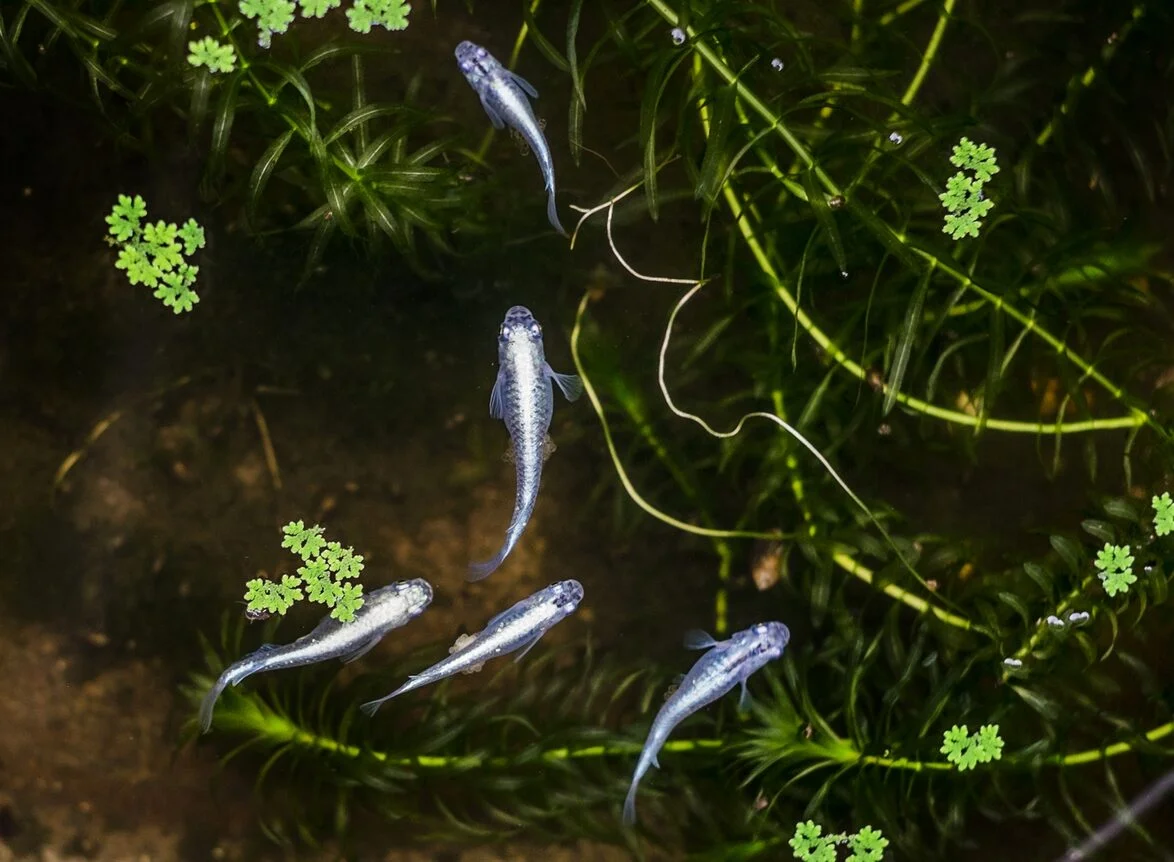
The Medaka, scientifically known as Oryzias latipes, is a small but remarkable fish native to East Asia. These fish have been used for centuries Japan cultivated and have a special cultural significance there. In the Netherlands they have become increasingly popular in recent years, especially among pond enthusiasts who are looking for an alternative to the traditional one goldfish or koi. With their modest size of only 3 to 4 centimeters, they are perfect for ponds of all sizes.
What makes the Medaka truly unique is their combination of characteristics found in few other pond fish. They are extremely hardy, can live in small volumes of water, are peaceful with other fish and plants, and require minimal maintenance. Plus, they come in a beautiful range of colors, from orange and white to blue and black. This versatility makes them an ideal choice for anyone who wants to create a vibrant and healthy pond without too much hassle.
Small fish, big benefits for your pond
One of the biggest benefits of Medakas is their positive impact on the pond ecosystem. These fish are excellent mosquito larvae eaters and thus help to naturally control the mosquito population in your garden. During the summer months, when mosquitoes are most active, you will see the Medakas busy at the water's surface, eagerly eating the larvae. This makes chemical pesticides completely unnecessary and ensures a natural balance in your pond.
In addition, Medakas are also real algae eaters. They like to nibble on filamentous algae and other unwanted algae species, keeping your pond water clearer. Their small size also means they produce less biowaste than larger fish such as koi or goldfish. This results in a more stable ecosystem with less chance of water pollution. Here are the most important benefits at a glance:
- Natural mosquito control by eating larvae
- Help control algae growth
- Produce minimal biowaste
- Do not disturb plant roots
- No diggers, so clear pond water
- Peaceful character, no aggression towards other fish
- Active on the water surface, clearly visible
Medakas even survive the Dutch winter
One of the most impressive qualities of the Medaka is their hardiness. Contrary to what you would expect with such a small fish, Medakas can handle the Dutch without any problems winter endure. They can withstand temperatures down to -15 degrees Celsius, provided the pond does not freeze over completely. This makes them one of the few small pond fish that you can leave outside all year round without having to worry.
During the colder months, the Medakas sink to the bottom of the pond, where they go into a kind of hibernation. Their metabolism slows down enormously and they hardly eat anymore. As soon as temperatures rise again in the spring, they become active and soon even start spawning. For a successful wintering, it is important that your pond is at least 60 centimeters deep, so that there is always an ice-free zone where the fish can retreat. It is also wise to use a pond heater or floating ice-free holder in extremely cold winters.
Tips for a successful wintering:
- Ensure a pond depth of at least 60-80 cm
- Stop feeding when the water temperature drops below 10 degrees
- Place a pond heater or ice-free holder during severe frost
- Remove in the autumn leaves and organic material from the pond
- Ensure sufficient oxygen with an aerator
- Check regularly whether an air hole remains in the ice
Maintenance? Almost not necessary with this fish
If you don't want to spend much time maintaining your pond, Medakas are the perfect choice. These fish are incredibly self-reliant and can thrive in a well-designed pond ecosystem. They find most of their food themselves in the form of insects, larvae, algae and other microorganisms that naturally occur in the pond. Additional feeding is actually only necessary if you want to stimulate growth or during periods with little natural food.
The nutritional requirements of Medakas are minimal compared to other pond fish. They eat small amounts and are not picky. You can feed them with special Medaka food, but also with finely ground fish food, daphnia or artemia. A rule of thumb is to give them 1-2 times a day an amount that they can eat within 2-3 minutes. Feeding too much is more likely to be harmful than too little, because leftovers feed can pollute the water. Many Medaka keepers do not feed at all and let the fish live entirely on natural food, which works fine in a well-balanced pond.
Perfect for beginners and experienced pond owners
For beginners, Medakas are an ideal first pond fish. They are forgiving when it comes to water quality and can tolerate small fluctuations in pH and temperature well. This gives you, as a novice pond owner, time to learn how to properly maintain a pond without immediately losing valuable fish. Moreover, Medakas are relatively cheap to purchase, which limits the financial risk if you are just starting out in the hobby.
But experienced pond owners also appreciate the Medaka for completely different reasons. They are a fascinating project for breeders because of the enormous variety of colors and patterns that can be achieved through selective breeding. In Japan, growing special Medaka varieties is a serious hobby with competitions and high prizes for rare specimens. In addition, Medakas are scientifically interesting: they are used in research into genetics, developmental biology and even space travel. In 1994, Medakas became the first vertebrates to reproduce in space!
Why Medakas are suitable for different levels:
For beginners:
- Easy to maintain
- Forgiving in terms of water quality
- Affordable to purchase
- Few special facilities required
- Clear behavior, easy to observe
For advanced users:
- Challenging breeding project with many varieties
- Interesting genetics and color inheritance
- Possibility of selective breeding
- Scientific background
- Active community and grower circuits
This is how you create the ideal Medaka paradise
Setting up a perfect Medaka pond does not have to be complicated. These fish have few requirements, but with a few smart choices you can optimize their living environment. Start with a pond of at least 100 liters, although bigger is always better. Medakas like clear water with lots of plants, both submerged and floating species. Plants such as hornwort, waterweed and duckweed provide not only shelter, but also natural food and spawning grounds.
The location of your pond is also important. Medakas are sun-loving fish that thrive in ponds that are in the sun for at least part of the day. They are most active at temperatures between 18 And 28 Degrees celsius. Make Sure there are enough shaded areas where they can hide during the hottest Hours. good filtration is recommended, but does not have to be overly powerful. medakas Do not like strong currents and prefer to swim in calm water. a Simple sponge filter or small pond filter is often sufficient.
Checklist for the ideal Medaka pond:
- [ ] Minimum 100 liters of water volume (more is better)
- [ ] Depth of 60-80 cm for wintering
- [ ] Mix of sun and shade
- [ ] Many aquatic plants (submerged and floating)
- [ ] Calm water without strong currents
- [ ] Simple filtration
- [ ] No large, aggressive fish as pond companions
- [ ] Shelter from herons and cats
- [ ] Gradual banks or exit points
Medaka varieties: a colorful spectrum
One of the most enjoyable aspects of keeping medakas Is the huge variety of colors and patterns available. hundreds of different Varieties have been created through Centuries of selective breeding in japan. the Most common are the orange medaka (Youkihi), White medaka (Miyuki), And the black medaka (wild Type). but There are also special varieties such as the glittering Miyuki with its metallic scales, the transparent Medaka where you can see the internal organs, and the rare blue Medaka.
The winter-hardy varieties are especially interesting for Dutch ponds. Not all farmed Medakas are equally hardy, so it is important to ask when purchasing whether the fish are suitable for wintering outdoors. The traditional orange and brown varieties are generally the most robust. If you're starting out with Medakas, it's wise to start with these harder varieties before investing in more expensive, rarer color varieties.
Popular Medaka varieties for Dutch ponds:
| Variety | Color | Winter hardiness | Suitability for beginners |
|---|---|---|---|
| Youkihi | Orange/red | Excellent | Very suitable |
| Miyuki | White with shine | Good | Fit |
| Wild type | Brown/gray | Excellent | Very suitable |
| Ao | Blue | Mediocre | Less suitable |
| Hikari | Metallic | Good | Fit |
| Albino | White/pink | Mediocre | Less suitable |
Medakas combine with other pond inhabitants
Medakas are peaceful fish that live well together with other peaceful pond inhabitants. They are ideal to combine with small shrimps such as Japanese pond shrimps, snails and other small fish species that do not exhibit predatory behavior. Please note that you do not keep large fish such as koi or large goldfish together with Medakas, because the small Medakas may regard them as food.
As far as aquatic plants are concerned, Medakas are the ideal pond companions. They do not damage plant roots or dig into the bottom like some other fish species. On the contrary, they prefer dense ponds where they can swim and forage among the plants. Floating plants such as duckweed and water lilies are particularly prized because Medakas like to attach their eggs to the underside of floating leaves. This also makes it easier to collect the eggs if you want to start breeding.
Suitable pond companions for Medakas:
Good:
- Japanese pond shrimp
- Posthorn snails
- Other small Medakas
- Small native fish (in some cases)
- Water insects
To avoid:
- Koi carp
- Big goldfish
- Sunfish
- Predatory aquatic animals
- Large dragonfly nymphs
Growing medakas: a fascinating hobby
Growing Medakas is surprisingly easy and can become a fascinating hobby. Medaka are very productive fish that spawn regularly from April to October, sometimes even daily. The females first carry their eggs with them for a while before depositing them on aquatic plants or other surfaces. These eggs are relatively large and clearly visible, which makes collecting them easy.
If you want to breed, you can carefully remove the eggs from the plants and place them in a separate container with clean water. At a temperature of about 25 degrees, the eggs hatch after 10-14 days. The young Medakas are immediately self-reliant and can eat small micro-organisms. You can supplement them with special breeding food or finely ground fish food. The great thing about Medaka breeding is that you can quickly see the results of selective breeding. By consciously selecting certain colors or patterns, you can develop your own unique line within a few generations.
Step-by-step plan for successful growing:
- Preparation: Provide a separate propagation container or aquarium (at least 20 liters)
- Collecting eggs: Check the plants daily for eggs and carefully remove them
- Incubation: Place eggs in clean water at 20-25 degrees
- Hatching: The young hatch after 10-14 days
- To raise: Feed the fry small portions several times a day
Receive a 10% discount on your first order when you sign up for our newsletter.


Leave a Comment
Your email address will not be published. Required fields are marked *