

Een vergelijking voor vijverliefhebbers
Als je op zoek bent naar de perfecte vis voor je vijver, kom je al snel twee populaire soorten tegen: de medaka (Japanse rijstvis) en de klassieke goudvis. Beide vissen hebben hun eigen charme en unieke eigenschappen, maar welke past het beste bij jouw situatie? In dit artikel duiken we in de belangrijkste verschillen tussen deze twee bijzondere vijvervissen. Of je nu een doorgewinterde medaka-liefhebber bent of nog twijfelt tussen beide soorten, na het lezen van dit artikel weet je precies waar je aan toe bent.
Medaka vs Goudvissen: Wat zijn de verschillen?
Grootte en uiterlijk
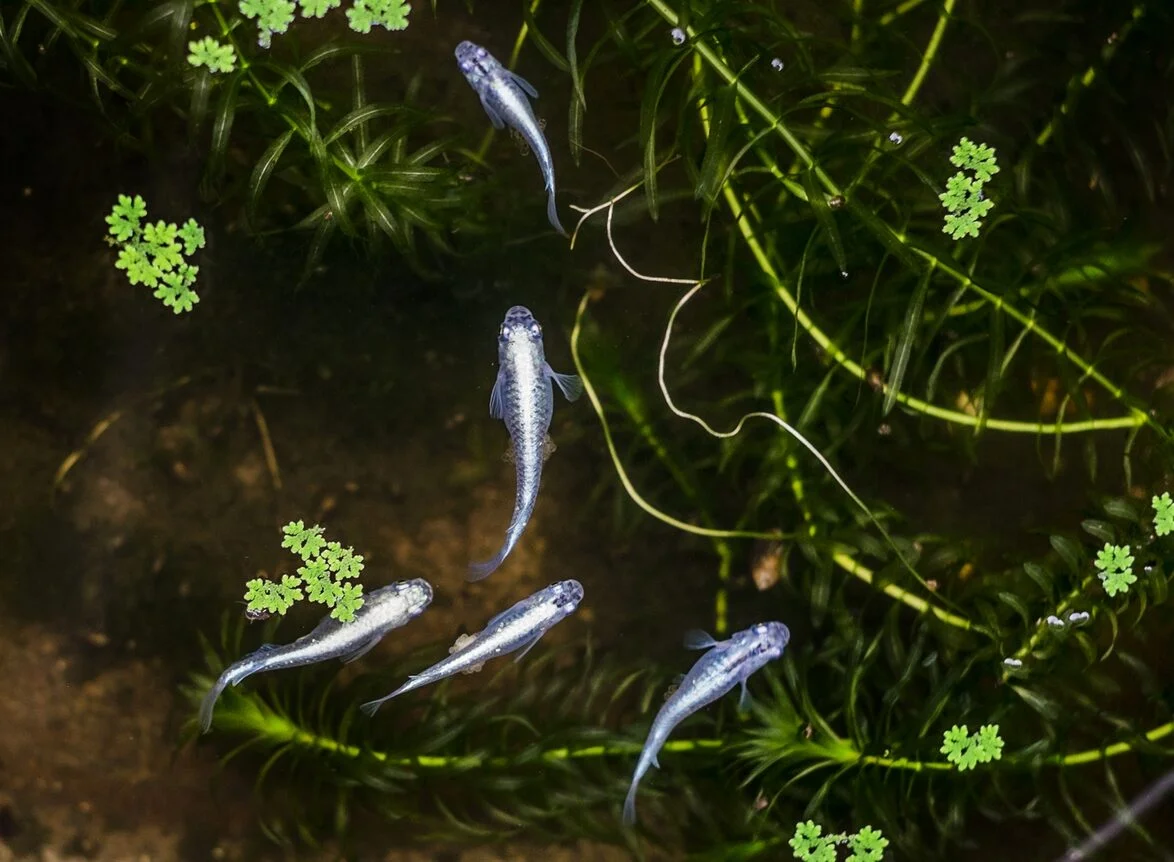
Het meest opvallende verschil tussen medaka en goudvissen is hun formaat. Een volwassen medaka wordt slechts 3 tot 4 centimeter lang, terwijl een goudvis gemakkelijk 15 tot 30 centimeter kan worden, afhankelijk van de variëteit. Deze compacte afmetingen van de medaka maken ze ideaal voor kleinere vijvers en zelfs grote aquaria. Qua uiterlijk zijn goudvissen natuurlijk iconisch met hun glanzende oranje, rode of witte kleuren, maar medaka’s staan daar zeker niet voor achter. Medaka’s zijn verkrijgbaar in prachtige variëteiten zoals zwart-wit (panda), metallic blauw, en de populaire oranje-rode tinten.
Levensduur en temperatuurtolerantie
Een gezonde goudvis kan bij goede verzorging 10 tot 20 jaar oud worden, sommige exemplaren zelfs ouder. Medaka’s hebben een kortere levensverwachting van ongeveer 2 tot 4 jaar, hoewel ze bij optimale omstandigheden ook ouder kunnen worden. Wat temperatuur betreft zijn beide soorten verrassend winterhard. Goudvissen zijn bekend om hun vermogen om onder het ijs te overleven, mits de vijver diep genoeg is. Medaka’s zijn echter echte kampioenen in temperatuurtolerantie: ze kunnen overleven in water van 2°C tot wel 40°C! Dit maakt ze bijzonder geschikt voor het Nederlandse klimaat, zowel in strenge winters als warme zomers.
Gedrag en sociale structuur
Goudvissen zijn sociale dieren die graag in groepen zwemmen en de bodem afzoeken naar voedsel. Ze kunnen echter territoriaal worden tijdens het paaiseizoen en hebben de neiging om planten op te eten of uit te graven. Medaka’s daarentegen zijn vredelievende schoolvissen die constant in beweging zijn en graag aan het wateroppervlak zwemmen. Hun zwemgedrag is levendig en speels, wat ze fascinerend maakt om naar te kijken. Een belangrijk verschil is dat medaka’s veel minder destructief zijn voor waterplanten dan goudvissen, waardoor je vijver een natuurlijker uiterlijk behoudt. Bovendien zijn medaka’s uitstekende muggenlarven-eters, wat ze extra nuttig maakt voor je vijver!
Welke vis past het beste bij jouw vijver?
Vijvergrootte en capaciteit
De grootte van je vijver is waarschijnlijk de belangrijkste factor bij het kiezen tussen medaka en goudvissen. Voor goudvissen heb je minimaal 1000 liter water nodig, met ongeveer 200-300 liter per vis om ze gezond te houden. Een te kleine vijver leidt tot stressgevoelige, ongezonde vissen en waterproblematiek. Medaka’s zijn veel flexibeler: je kunt al beginnen met een vijvertje van 100-200 liter, en zelfs kleinere volumes kunnen geschikt zijn voor een kleine groep. Dit maakt medaka’s perfect voor balkons, kleine stadstuinen, of als aanvulling op een grotere vijver. Houd er wel rekening mee dat medaka’s het beste gedijen in groepen van minimaal 6 exemplaren.
Onderhoud en verzorging
Goudvissen produceren relatief veel afval, wat betekent dat je een goed filtersysteem nodig hebt en regelmatig water moet verversen. Ze hebben ook de neiging om modder op te woelen, waardoor het water troebel kan worden. Medaka’s zijn in dit opzicht veel eenvoudiger: ze produceren minimaal afval en hebben geen zware filterinstallatie nodig. Een eenvoudige sponsfilter of zelfs goed beplante vijver zonder filter kan al voldoende zijn voor een groep medaka’s. Wat voeding betreft eten beide soorten graag hoogwaardig visvoer, maar medaka’s hebben kleinere monden en hebben dus fijnkorrelig voer nodig. Een praktische tip: medaka’s zijn gulzige eters van muggenlarven, waardoor je in de zomer minder last hebt van muggen!
Esthetiek en persoonlijke voorkeur
Uiteindelijk komt de keuze vaak neer op wat je visueel aantrekkelijk vindt en wat bij je levensstijl past. Goudvissen zijn statement-vissen: groot, opvallend en vaak de blikvangers van een vijver. Ze zwemmen rustiger en zijn goed zichtbaar, zelfs vanaf een afstand. Medaka’s bieden een subtielere, meer natuurlijke schoonheid. Hun kleine formaat en levendige zwemgedrag nodigen uit tot nauwkeurige observatie, en hun diverse kleurpatronen zijn bij nadere beschouwing adembenemend. Voor liefhebbers van Japanse tuinen of natuurlijke vijvers zijn medaka’s vaak de voorkeur, omdat ze het authentieke gevoel van een rijstveldvijver creëren. Bovendien kun je met medaka’s makkelijker experimenteren met verschillende kleurvariëteiten zonder je vijver te overbelasten.
Zowel medaka als goudvissen zijn prachtige toevoegingen aan je vijver, maar ze hebben duidelijk verschillende eisen en eigenschappen. Goudvissen zijn perfect als je een ruime vijver hebt en houdt van grote, opvallende vissen die jaren meegaan. Medaka’s daarentegen zijn ideaal voor kleinere ruimtes, gemakkelijker in onderhoud, en bieden een unieke, natuurlijke charme die perfect past bij de Japanse esthetiek. Voor veel medaka-liefhebbers is de keuze al gemaakt: deze kleine maar fascinerende rijstvissen bieden een ongeëvenaarde combinatie van schoonheid, veerkracht en gemak. Welke vis je ook kiest, zorg ervoor dat je vijver goed is voorbereid en dat je de behoeften van je vissen kent. Dan kun je jarenlang genieten van je eigen waterparadijs!
Ontvang 10% korting op je eerste bestelling wanneer je je inschrijft voor onze nieuwsbrief.


Leave a Comment
Your email address will not be published. Required fields are marked *