


A beginner's guide
Medaka fish, also known as Oryzias latipes, are small freshwater fish belonging to the family Adrianichthyidae. They originally come from East Asia and are often found in rice fields, ponds and slow-flowing streams. Medaka fish have become popular not only as pets but also as a model organism in scientific research. Their small size, rapid reproduction and transparent embryos make them ideal for studying various biological processes. In this article we look at the history and origin of the medaka fish, their physical characteristics, habitat and environmental requirements, diet and feeding habits, reproduction and breeding techniques, common varieties, health and care tips, setting up a medaka aquarium, their importance in scientific research and further sources for medaka fish enthusiasts.


The history and origin of the Medaka
Medaka fish have a long history going back thousands of years. They are thought to originate from East Asia, specifically Japan and Korea. In Japan, medaka have been bred for centuries for their vivid colours and unique patterns. They were originally kept as ornamental fish in ponds and gardens. Over time, medaka fish became popular pets among the Japanese aristocracy.
In the 20th century, medaka gained recognition outside Japan when they were introduced to the scientific community as a model organism for genetic research. Because of their small size and short generation time they are ideal for studying genetics and developmental biology. Today, medaka are widely used in various research fields, including toxicology, cancer biology, neurobiology and environmental studies.
Physical characteristics of Medaka fish
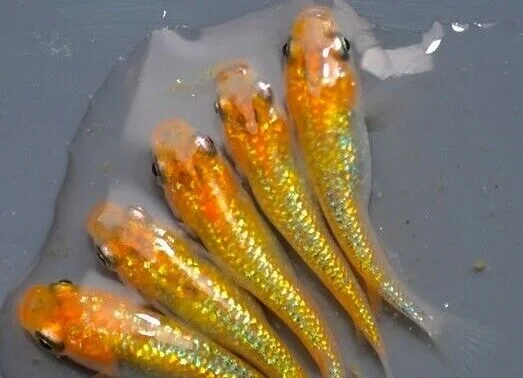
Medaka are small and usually reach a length of 5-7 centimetres (2-3 inches) when fully grown. They have a slender body shape with a slightly compressed appearance. The body is covered with scales that can vary in colour from silver to gold, depending on the variety. Medaka fish are known for their vivid colours and unique patterns, which can differ strongly from one individual to another.
One of the most striking features of the medaka is their transparent skin, which lets researchers observe their internal organs and developmental processes. This transparency is especially useful when studying embryonic development and organ formation. Medaka fish also have a pair of large eyes and a small mouth with sharp teeth.
Habitat and environment of the Medaka fish
In their natural habitat, medaka live in rice fields, ponds and slow-flowing streams. They prefer shallow water with plenty of vegetation for cover. In captivity it is important to replicate these conditions to guarantee the health and wellbeing of the medaka fish.
When setting up an aquarium for medaka, a minimum size of 20 litres (5 gallons) is recommended for a small group of fish. The tank should be equipped with a filter to keep water quality up and a heater to control the temperature. It is also important to offer the fish enough hiding places and plants so that they feel safe.
Water quality is crucial for the health of the medaka fish, but they are very hardy fish that can survive in less ideal conditions, such as old rice fields. The water must be kept clean. Change water regularly (10% of the tank or pond water per week) to remove accumulated waste or toxins. The ideal temperature for medaka is between 15-28°C, although they can tolerate a wide range from 0-42°C, which makes them the ideal fish for small ponds throughout Europe!
Medaka fish as a research model
Medaka fish have become an important model organism in scientific research because of their unique characteristics and biological properties. They have a small genome, a short generation time and transparent embryos, which makes them ideal for studying various biological processes.
Medaka fish have been used in research into genetics, developmental biology, toxicology, cancer biology, neurobiology and environmental studies. They have contributed to our understanding of gene function, embryonic development, organ formation and disease mechanisms.
Besides their biological advantages, medaka fish are also cost-effective and easy to maintain in the laboratory. They need minimal space and resources compared with other model organisms such as mice or zebrafish.
Medaka keepers love ricefish
Medaka fish are fascinating and easy-to-care-for ricefish that have attracted the attention of both hobbyists and scientists. Their vivid colours, unique patterns and transparent embryos make them a joy to observe and study.
Whether you are interested in keeping medaka fish as pets or want to use them as a research model, it is important to give them the right care and attention. By gaining insight into their history, physical characteristics, habitat requirements, diet and feeding habits, breeding techniques, common varieties, health and care tips and how to set up an aquarium, you can guarantee the wellbeing of these wonderful fish.
If you want to know more about medaka fish, various sources are available. Online forums and communities for medaka fish enthusiasts can offer valuable insights and advice. In addition, scientific journals and publications often carry research articles about medaka fish, which leads to a better understanding of their biological significance.
The medaka ricefish is a unique and versatile species that has made an important contribution to both the pet industry and scientific research. Their small size, vivid colours and transparent embryos make them a joy to observe and study. Whether you are a hobbyist who wants to keep medaka fish as pets or a scientist who wants to use them as a research model, there is much to learn and appreciate about these fascinating creatures.
Create your Medaka zen pond and visit our shop!
Ontvang 10% korting op je eerste bestelling wanneer je je inschrijft voor onze nieuwsbrief.


Schrijf een reactie
Je e-mailadres wordt niet gepubliceerd. Verplichte velden zijn gemarkeerd met *